
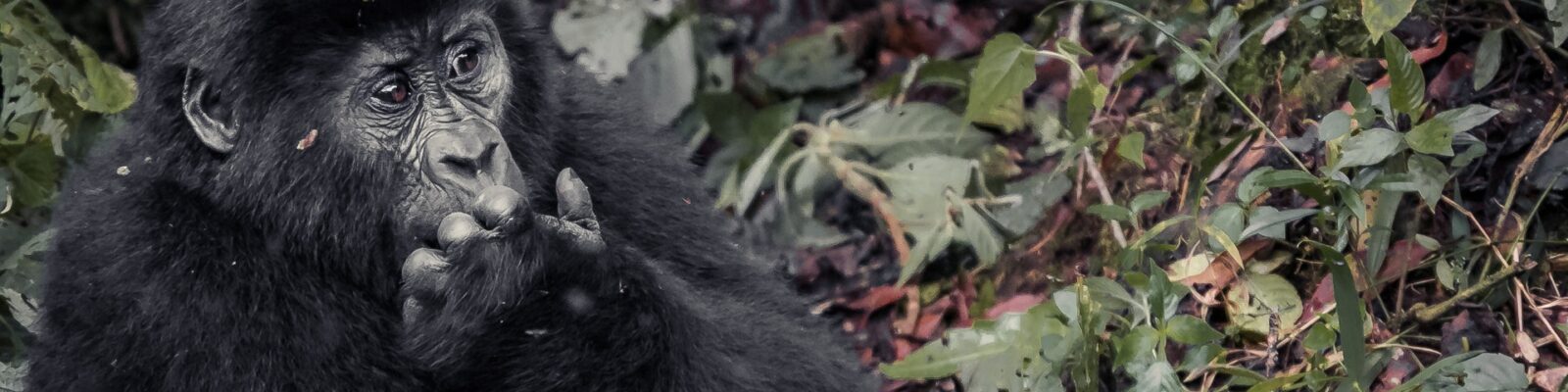
People (poachers and encroachers), lightning and a variety of other factors all pose a significant threat to the humble, adorable gorillas. Only about 400 gorillas roamed the globe during the 19th century, a number that has increased consistently since then. The world’s two gorilla species (western and eastern Gorillas) are exclusively found on the African continent, in the Virunga mountain ranges that span through Uganda, Democratic Republic of Congo and Rwanda. These are the world’s largest primates and human’s closest relatives, with 95 percent of their genes identical to that of a man.
The entire world is called to action, as the late Dian Fossey, a prominent primatologist did while in Rwanda’s volcanoes national park 3 decades ago, for the benefit of future generations. It’s all possible to save gorillas and here’s how we can collectively achieve it:-
Undertaking a gorilla trekking tour.
One gorilla trekking permit purchased is equivalent to saving over a thousand gorillas. Money raised from gorilla trekking activities is used to fund gorilla conservation efforts, compensate ranger guides, and aid local communities living outside the park through setting up livelihood projects, resulting in a joint effort to save the primates.
Gorilla trekking permits in Uganda cost 700 USD, 1500 USD in Rwanda and 400 USD in the Democratic Republic of Congo. The activity is done all year round, starting in the morning hours. A particular Gorilla family can only be visited by a group of eight persons per day, all of whom must be at least 15 years and older.
Complying with the trekking rules.
Following the parks’ and apes’ trekking norms and guidelines is one definite method to save them, as well as yourself. After extensive investigation and analysis of gorilla behavior, rules were established to guide all visitors while in the jungle.
Some of the regulations include; not littering the park since it may harm the residents, keeping your voice low, staying at least 7 meters away from the family to minimize possible transmission of illnesses and don’t go trekking if you’re unwell. Follow the ranger’s directions. No feeding the apes, no staring them in the eyes since it irritates them, no using spotlights when taking shots and spending no more than an hour with the gorillas photographing and understanding their distinctive routines.
Donating towards gorilla conservation.
Even a small donation of $1 or more can make a significant difference in the survival and conservation of gorillas in their natural habitat. Some well-wishers send material donations or money to the appropriate authorities for conservation of the apes on yearly basis. The efforts are focused on healing sick apes, caring for orphans, safeguarding the entire jungle against poachers and other possible dangers.
Visiting local communities outside the park.
You might be wondering how visiting villages near the park could help gorillas. People living outside the park used to be fully reliant on the forest for food, shelter and water. They lived as gatherers and wonderers until governments and conservationists drove them out in early ‘90s, thereby turning them into gorilla foes instead. Majority of these people resorted to poaching and at worst they don’t spare the gorillas who cross through on their way to their farmlands.
Therefore, by visiting them, buying their souvenirs and craft materials helps them earn some money hence improving their livelihoods and foster a sense of ownership and value for the gorillas.
Sensitization.
Make gorillas renowned, as well as their importance and location. Those who imperil apes will have nowhere to go and no incentive to act cruelly against man’s closest relative once they are known to the world. Thanks to the late primatologist Dian Fossey’s work and fame, she dedicated her life to saving and protecting gorillas against all odds which ultimately ended her life.
Therefore, everyone has a responsibility to save our cousins, the gorillas. Their population is steadily rising, but more ought to be made to ensure their continued safety. Poaching, human encroachment and violation of park rules and regulations must all be stopped.


